Mains
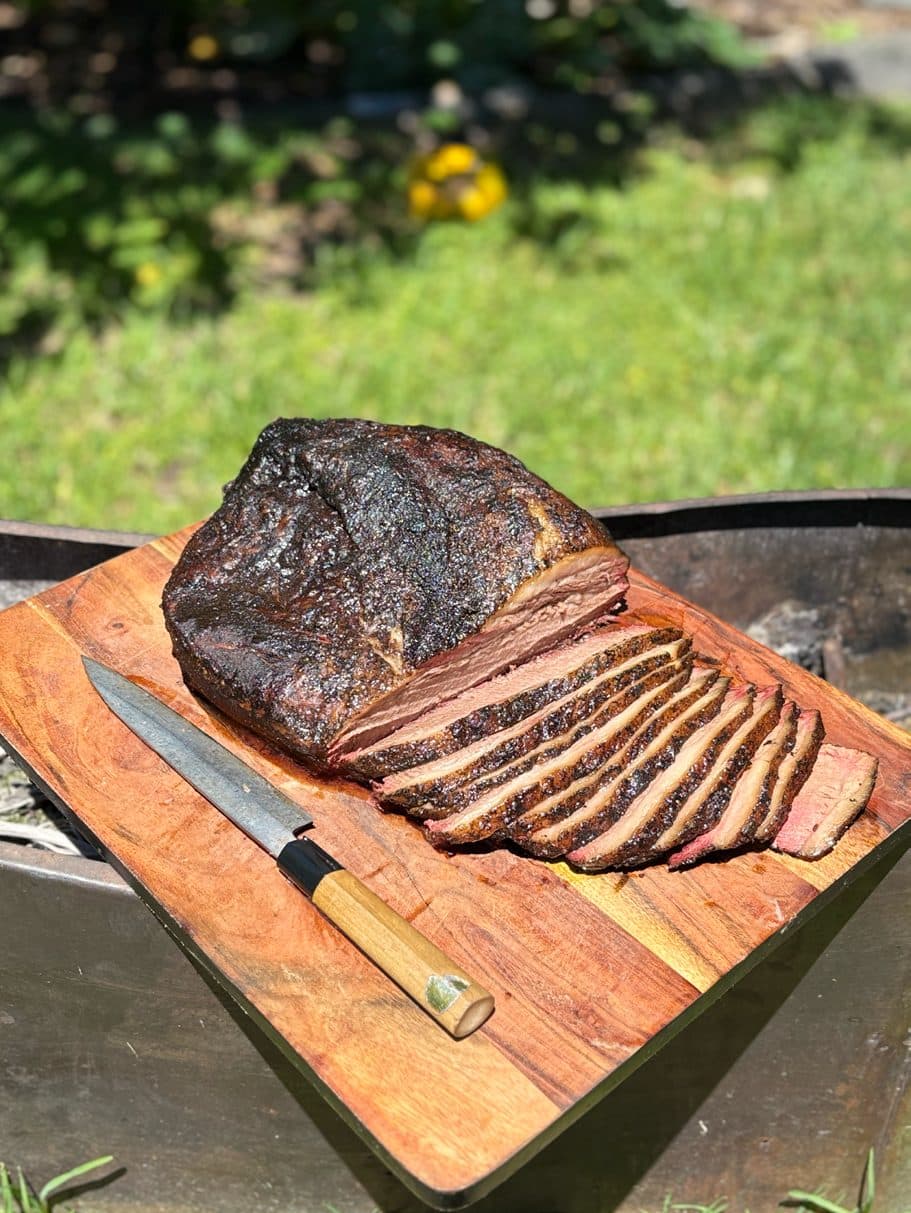
Beef Brisket
Μοσχαρίσιο Ψαρονέφρι
There are as many ways to cook brisket as there are pitmasters out there. However, there is consensus on two main themes. One, while there is nothing stopping you from experimenting, typically salt and pepper are the only ingredients you need. Two, no matter what method you choose, care and patience are the two most essential components to achieving a great result. Steven is the designated pitmaster of the family, and has been experimenting with his technique to craft the perfect result for years. Cooking a brisket is a deeply personal affair, and while he can’t tell you exactly what to do, he will impart the wisdom he has picked up along the way.
Main
Ingredients
- 100g salt
- 100g pepper
- Both with the coarseness
- of fine sand
- Whole brisket - approx 7kg
- will feed around 7 people after
- trimming and cooking
Method
- Evenness: Make sure the brisket flat is thick and as even as possible. This will minimise the amount of trimming, and help get nice, even slices in your final product.
- Fat : Look for evenness and consistency in the cap, avoiding briskets that may have been gouged or sliced into by the butcher. Flip it over and look to see if you can identify any marbling, typically this is white striations of fat running parallel to the muscle fibers, and what you want to see.
- Flexible: Bend it and see how pliable it is. The easier it bends, the more potential for the final product to be tender. Finishing • You are aiming for a final temperature around 94 degrees, however experience does count for a lot, and the number is only a guide • If the brisket feels tender in the paper (bends easily), and the probe goes into the meat with no resistance, it is ready • Wrap the brisket in a towel, and place it into a cooler to rest for at least 3 hours • Take it out of the cooler, unwrap it from the paper and mutter a little prayer under your breath. Slices about as thick as a pencil are the industry standard, but do what makes you happy. Brisket also reheats famously well and you can vacuum seal large pieces then squirrel them away in your deep freeze for the winter. Seasoning Using the 50/50 blend of coarse salt and pepper, evenly cover the entire brisket, starting with the underside first to ensure the rub doesn't get scraped off the top when you flip it over • Note: You can use a binder of oil, mustard, mayonnaise or anything else that of similar viscosity. Point muscle Fat cap Flat Trimming Briskets are made up of two main muscles. One is rounded, called the point, one is flat, called the flat.
- The flat • Round off the thinnest part of the flat to around 3cm thick to avoid drying out and improve airflow. • Trim fat cap to 1cm thick using a flat blade to avoid gouges as best as you can. Fat can pool in the divet and affect the formation of your bark (the crusty outer layer that is formed by the fusion of rub, fat and smoke.)
- The point • Carefully remove the protruding deckle (the mohawk of meat running down the middle of the point) so that the deckle is even with the fat cap. This strip of meat will dry out, burn and potentially affect air flow. You can use this later as trim for sausages or stews. • As with the flat, trim the fat cap so that it is approximately 1cm thick across the entire brisket. • Do not trim off the fat cap completely; it protects the meat, adds significant flavour and enhances the cooking experience. • Use a very sharp knife and make sure your brisket is cold because cold fat is easier to shape. Go slowly, be patient and cut with confidence. • Don’t be discouraged by mistakes, remain curious and set realistic expectations and goals. The rabbit hole is deep, and you can get lost in the detail if you allow yourself to. It's all part of your brisket journey.