Opening Stories
A Guide to Greek Coffee
Ένας οδηγός για να φτιάξετε ελληνικό καφέ
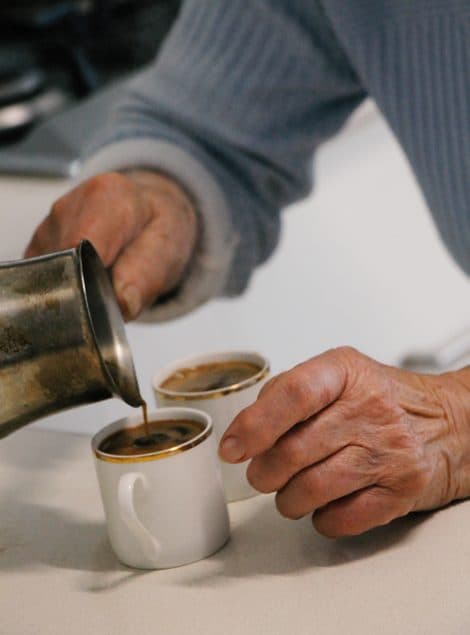
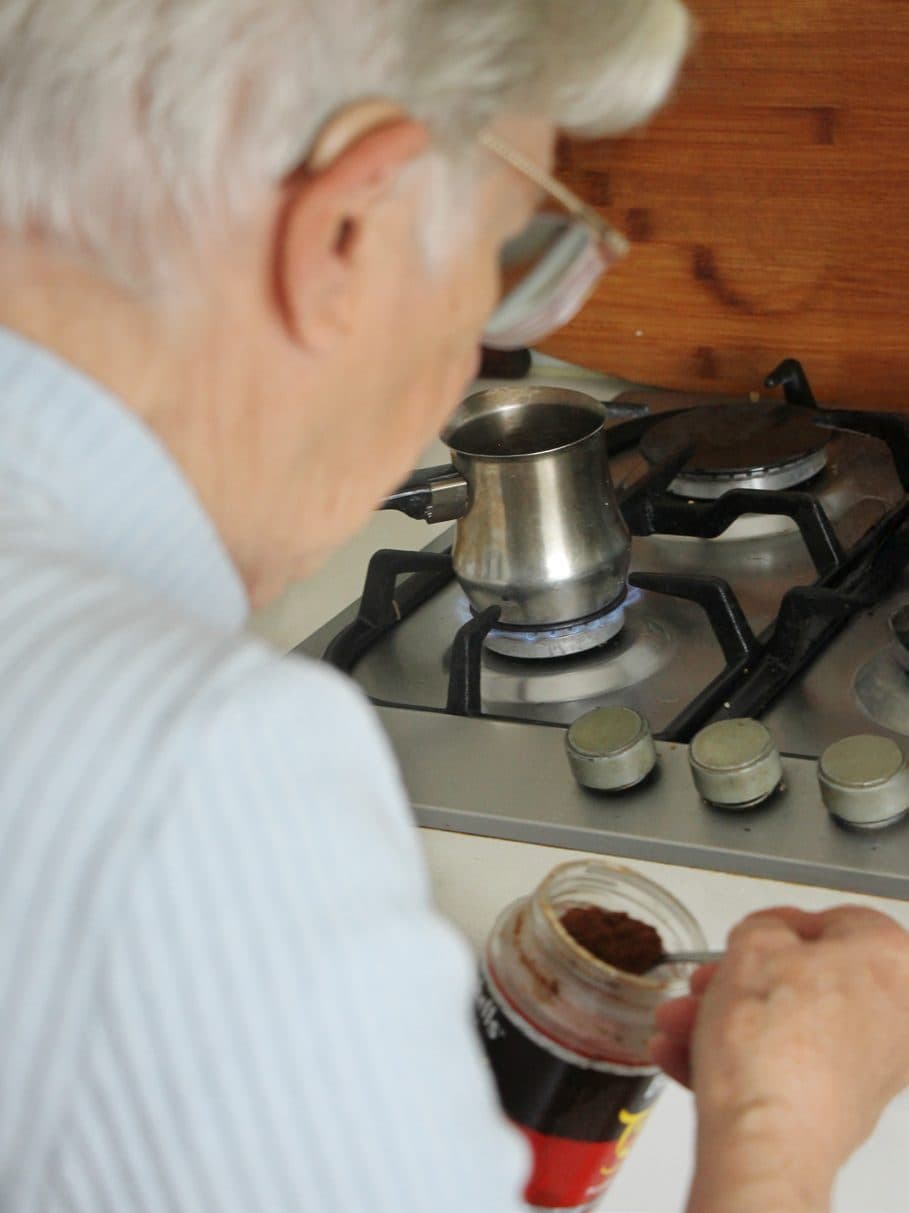
Serves: Well with biscuits and gossip Prep time: 500 years Cook time: 5 min Known for being stronger than a regular coffee and always served black, Greek coffee is an acquired taste for some. In our family, being offered one by Yiayia was almost a rite of passage, you only got a cup once she decided you were old enough to appreciate the unique flavour of Greek coffee. Ένας οδηγός για να φτιάξετε ελληνικό καφέ • A guide to Greek coffee Greek coffees are made with a briki (μπρίκι), a small metal pot used to boil the coffee over the stove. The good briki is a personal item, often kept for life or passed down through family, and is the key to unlocking the full potential of Greek coffee. The cup traditionally used (φλιτζάνι) is much smaller than the average cup. To make your own, add 1 heaped teaspoon of coffee and 1 teaspoon of sugar, per cup of water and mix well. Yiayia uses Bushells Turkish pulverised coffee, which you can find at most supermarkets. Add an extra half teaspoon of sugar if you like it sweet (γλυκό). Heat the briki gently over medium-low heat, stiring it quickly. Once a thick foam forms on top, it’s ready. Remove it off the heat immediately, and don’t let it boil over. The foam on top (καϊμάκι) is considered the best part of the coffee. The final coffee should be rich, foamy, and thicker than a standard black coffee. Enjoy your Greek coffee the proper way, slowly sipped, with a goulouria stick for dunking (see page 119 for the recipe). When you finish your coffee, you will find a layer of coffee grounds at the bottom of your cup which you don’t drink. Instead, flip the cup upside down onto the saucer, let the grounds settle, then turn it back over to reveal patterns inside the cup said to predict your future. Though for that part, you’ll need to ask Soula. 17. 17.
PDF p. 10